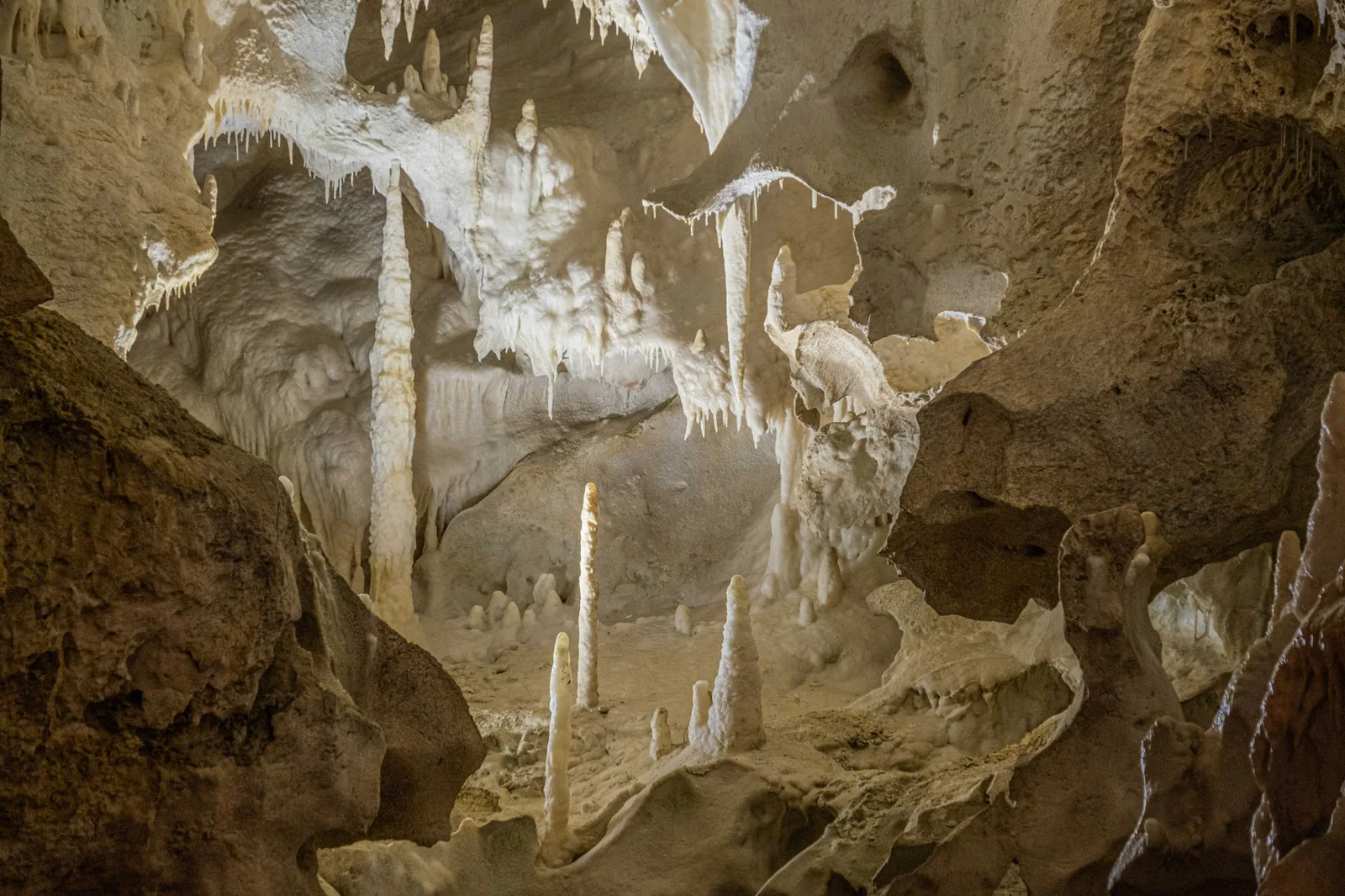
Limestone stalactite formations inside a tropical show cavern.
· Photo: JERRYE AND ROY KLOTZ MD (Wikimedia (CC BY-SA 3.0))
$10 (~€9.20) / Kids $8Adult Ticket
Hourly 9:00 AM – 3:00 PMDaily Tours
45 – 50 Min GuidedTour Duration
49 Entrance StepsAccess Steps
Live Date & Seat Availability
Hato Caves: Check Availability
Perched on the sun-baked limestone cliffs directly beside Curaçao International Airport, Hato Caves (Grotten van Hato) offers visitors something rare on a Caribbean beach island: a deep shadow plunge into 300,000-year-old fossilized coral caverns layered with indigenous Caiquetio rock carvings and colonial resistance history. Covering roughly 4,900 square meters across Curaçao’s elevated third limestone terrace, Hato runs strictly on a structured guided schedule rather than casual all-day wandering. Getting the most out of your visit comes down to catching the right hourly departure, dressing for humid tropical chambers rather than freezing cave air, and pairing the short 45-minute walkthrough smoothly with nearby flamingo salt flats or west-coast turtle beaches.
KEY TAKEAWAYS
Essential Logistics & Takeaways
Walk-Up Entry Fees: Non-resident Adults (13+) $10.00 USD (~€9.20 / ANG 17.50); Children (4–12) $8.00 USD (~€7.36); Curaçao Residents (Sedula ID) ANG 12.25 / ANG 8.75.
Daily Schedule: Open 7 days a week, 9:00 AM to 3:00 PM; guided tours depart every hour on the hour (45–50 minutes inside), with the final group entering at 3:00 PM.
Exact Location:F.D. Rooseveltweg, Willemstad (12.1798, -68.9484), 4 minutes from CUR Airport and 15 to 20 minutes (9–10 km) from Willemstad cruise terminals.
Steps & Accessibility: Visitors climb 49 entrance steps; cave interior is NOT wheelchair accessible, while the outdoor Indian Trail is paved, flat, and wheelchair friendly.
Climate & Wildlife: Warm, damp tropical cavern air (zero jackets needed!) sheltering harmless long-nosed and long-tongued nectar bats; keep camera flash OFF.
Top Guided Island Tours & Tickets Compared
Since gate admission only runs $10 at the door for self-drivers, online tour value comes from bundling highway transit, guided commentary, wild flamingo viewpoints, and western snorkeling bays into one coordinated half-day or full-day booking. Inspect our top four benchmarked operators below, or open the complete tickets and excursions directory featuring 13 verified Curaçao itineraries with 24-hour mobile cancellation.
INDEPENDENT OPERATOR BENCHMARKS
Hato Caves: Top 4 Tours & Tickets Compared
Benchmarked by verified pricing, duration, departure point, and cancellation flexibility.
Best All-In-One
★ 4.7 (60)GetYourGuide
From Willemstad: Hato Caves, Turtle Snorkel & Kenepa Beach
Show up at Hato Caves at twenty past the hour and you will spend forty minutes browsing the souvenir patio waiting for the next group bell. Unlike flexible self-guided coastal parks, every cavern entry starts strictly on the hour at 9:00 AM, 10:00 AM, 11:00 AM, 12:00 PM, 1:00 PM, 2:00 PM, and 3:00 PM, 7 days a week. Reception unlocks around 8:50 AM, giving early birds ten quiet minutes to buy walk-up tickets ahead of tour buses. Review complete pricing nuances and afternoon cutoff traps in our opening hours and prices schedule:
Non-Resident Admission: Adults (ages 13+) pay $10.00 USD (~€9.20) or ANG 17.50, while children ages 4 to 12 pay $8.00 USD (~€7.36). Note small travel groups under 8 people require zero advance cave reservations, simply purchasing tickets directly at the window on arrival.
Local Resident Tariff: Visitors presenting a valid Curaçao Sedula pay reduced rates of ANG 12.25 for adults and ANG 8.75 for children.
Tour Languages: Regular hourly departures operate across English, Dutch, Spanish, and Papiamentu (frequently delivered bilingually when mixed cruise or resort travelers arrive together; German and Portuguese are available via advance office booking on +5999 5233353).
Indian Trail Early Wrap-Up: Plan 75 to 90 minutes total on property so you experience both the 45-to-50-minute cave tour and the 20-to-30-minute outdoor Indian Trail. Because park staff start closing the outdoor trail around 2:45 PM, anyone taking the final 3:00 PM cavern tour needs to walk the Indian Trail first by 2:15 PM!
Which hour feels nicest inside? Aim for 9:00 AM sharp or the 2:00 PM afternoon slot. Between 10:30 AM and 12:30 PM, mega-ship excursions from Otrobanda port roll up in waves, expanding quiet 10-person walks into noisy 35-to-40-guest lines climbing up the concrete steps together. While waiting around reception, use the clean restrooms, grab chilled bottled water, or browse local coral stone exhibits before the top-of-the-hour bell rings.
Daily Crowd & Ticket Strategy
Matching Your Visit Hour to Cruise Ship Waves
Quietest Hourly Entries9:00 AM & 2:00 PMSmallest groups of ~8 to 12 guests before morning buses arrive or after half-day tours leave.
Cruise Bus Peak10:30 AM to 12:30 PMMulti-ship days crowd reception and the 49 stone stairs right before 11:00 AM and noon.
Ticket Value Rule$10 Gate vs $69+ ComboBuy $10 walk-up entry if renting a car; book guided $69 to $135 combos if without a car ($60 to $80 RT taxi).
Wide sunlit opening inside coral limestone grotto showing rock textures.
· Photo: Francesco Ungaro (Pexels License)
What You See Inside: Geology, Formations & Resident Bats
Most sea caves around Curaçao formed down along the lower second coastal shelf, whereas Hato Caves sit perched high along the third coral limestone terrace. Over hundreds of thousands to millions of years, ancient Caribbean reefs stacked coral skeletons beneath ocean water before tectonic uplift raised the northern rim dry and exposed porous fossil stone to mildly acidic rainfall dissolution. Once opened formally to visitors in 1991 as a protected show cave, Hato revealed 4,900 square meters of sunlit overhangs, crystal dripstones, and underground mineral water.
Inside illuminated walkways, bilingual guides spotlight memorable limestone stalactites (hanging down from ceilings) and stalagmites (rising upward from wet stone floors) shaped purely by calcite water drops over millennia. Because Curaçao receives modest seasonal rainfall compared to wet temperate valleys, mineral cones grow remarkably slowly here, adding mere millimeters across lifetimes. Look out for Mother Maria (Madonna), the sprawling Sleeping Giant, Freedom Fountain, pirate-themed stone silhouettes, and still subterranean pools gleaming quietly below dark arches. Learn why touching glistening mineral cones stops growth permanently in our dedicated geology, formations, and bats guide.
Just past mid-loop, lights dim slightly beneath a shadowy ceiling vault sheltering Hato’s resident colony of wild long-nosed bats and long-tongued fruit/nectar bats (Glossophaga longirostris). Do they swarm or dive near guests? Never! During sunny daylight hours these harmless little bats sleep upside down silently overhead, slipping out after sunset to pollinate Curaçao’s iconic night-blooming kadushi cacti. Keep voices low and camera flash completely disabled whenever guides pause below their upper chamber.
The Wheelchair-Friendly Indian Trail & Colonial Escape History
Two unforgettable chapters of human survival anchor Hato Caves far deeper than standard tourist brochures convey. Explore both layers carefully in our Indian Trail and history guide:
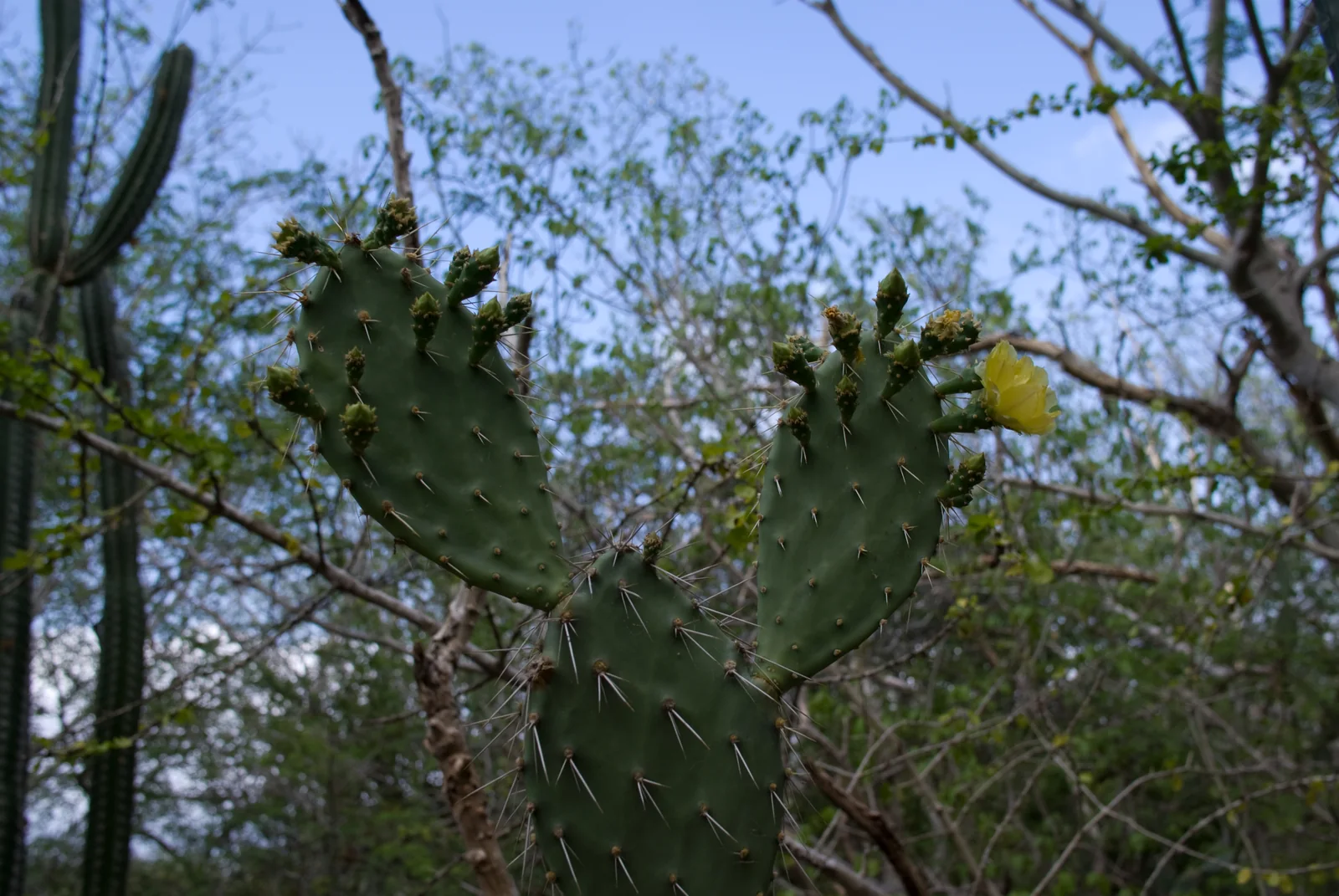
Indigenous Caiquetio Heritage (1,500+ Years Ago): Centuries before European vessels crossed the Atlantic, Caiquetio (Arawak) Amerindians sheltered inside these elevated limestone chambers, used sheltered pockets as ceremonial burial sites, and carved symbolic geometric petroglyphs and drawings across outer rock ledges. Today, you inspect preserved carvings along the self-guided Indian Trail, a flat, smooth paved botanical loop winding past cacti, green iguanas, blue-tailed blausana lizards, and native wayaká trees right beside reception. Best of all, unlike the steep cavern stairs, the Indian Trail welcomes wheelchairs, walkers, and strollers effortlessly!
18th & 19th-Century Enslaved Sanctuary: During Curaçao’s colonial plantation era and freedom uprisings (including Tula’s major 1795 island revolt), escaped enslaved men and women vanished up onto the limestone scrub to shelter deep inside Hato’s darkened side galleries for months undetected. Look carefully overhead where guides aim flashlights along specific chamber vaults: dark cooking-fire and torch soot marks from those hidden survivors remain visible across ancient stone ceilings today.
Before pulling up to reception, double-check physical realities in our planning, steps, and safety guide so nobody feels caught off guard:
Climbing 49 Entrance Steps: Reaching the third-terrace mouth requires walking up 49 stone and concrete steps outdoors under Caribbean breeze (the cave interior itself has handrails yet remains NOT wheelchair or stroller accessible).
Warm & Humid Microclimate: Leave jackets behind! Unlike chilly European or North American limestone caves, Curaçao sits near the equator, keeping Hato’s underground galleries warm and noticeably humid despite large installed air ventilators. Wear light breathable cotton or athletic fabrics rather than heavy denim.
Non-Slip Footwear: Wet mineral drips leave occasional damp slick spots along interior concrete ramps. Closed-toe sneakers or grippy sport sandals outperform flat beach flip-flops hands down!
Lens Condensation Warning: Stepping straight from breezy dry parking lots or air-conditioned tour vans into warm cavern humidity instantly mists camera lenses and eyeglasses. Pull cameras outdoors 10 minutes early while buying tickets so glass warms up cleanly, and verify auto-flash stays OFF.
Claustrophobia Check: Most galleries open into tall vaulted auditoriums lit gently from stone ledges, with only short connecting corridors requiring brief single-file steps. Walk near the rear or front end beside your guide if enclosed spaces ever feel tight.
Emergency Contacts: Keep 911 (Police/Fire), 912 (Ambulance), +5999 745-0000 (Curaçao Medical Center in Otrobanda), and +5999 8680379 (Hato Park Office) handy before heading out.
Getting to Hato Caves: Rental Car, Bus 4B, Airport & Cruise Port
Sitting along F.D. Rooseveltweg just north of downtown Willemstad makes Hato Caves one of the easiest attractions on the island to reach without expensive private transfers. Check exact routes in our getting there transport guide and dedicated cruise ship shore guide:
Rental Car ($45 to $65 USD/day): Drive 15 to 20 minutes northwest from Willemstad (or 4 minutes from CUR Airport) straight into Hato Caves’ free on-site parking lot (12.1798, -68.9484). Lock doors cleanly and keep zero bags, luggage, or electronics visible through cabin windows!
Public ABC Bus 4B (ANG 2.00 to 2.50 / ~$1.15 to $1.50 USD): From Mega Pier cruise docks, walk 10 to 15 minutes to Otrobanda Bus Terminal (Brionplein) and board Bus 4B (Otrobanda - Hato) toward the airport. Remember Bus 4B runs roughly once per hour, so confirm live departures on the ABC Curaçao app (autobusbedrijf.com, WhatsApp (+5999) 724 4222) and avoid catching hourly buses near tight ship gangway deadlines.
Regulated TX Taxis ($30 to $40 USD One Way): Licensed “TX” cabs never run meters; zone fares cover 1 to 4 passengers (+25% surcharge for 5+ riders or late night). Since empty cabs rarely linger outside Hato Caves between tours, ask your driver for an hourly wait arrangement (~$20 to $30 USD/hour) if heading right back downtown or continuing west, or compare bundled $69 to $90 USD tours that include transport and beaches together!
Walking From CUR Airport: Traveling light on a long daytime flight layover? The cave entrance sits roughly a 12-minute walk along F.D. Rooseveltweg from Curaçao International Airport terminal, though watch midday heat if hauling bags.
Cruise Port Shore Pacing: Mega Pier and Mathey Wharf lie just 9 to 10 km south, yet two major cruise ships in port can slow afternoon Schottegat bridge traffic between 3:30 PM and 5:00 PM. Always leave a 90-minute gangway return margin when booking independent afternoon loops.
Combining Hato Caves With Flamingos, Kokomo Beach & Westpunt Turtles
Because Hato Caves wrap up within 90 minutes and sit squarely on the road leading northwest, smart visitors turn the morning into a memorable coastal loop rather than driving straight back to town:
Half-Day Loop (4 Hours, Ideal for Cruise Ships & Families): After finishing the 9:00 AM or 10:00 AM cave tour, drive 20 minutes west to spot wild Caribbean flamingos wading free beside Sint Willibrordus (Saliña Jan Kok) salt pans ($0 free roadside platform; pack binoculars!), then spend early afternoon relaxing under shaded palapas at Kokomo Beach (Vaersenbaai) (free beach entry, loungers ANG 10–15 / ~$6–$9 USD, full restaurant/bar, restrooms, showers, PADI dive center, no outside coolers). Map every stop with our half-day flamingos and Kokomo guide.
Full-Day Westpunt Safari (6 to 7 Hours): Ready for big west-coast adventure? Chain 9:00 AM Hato Caves with Sint Willibrordus flamingos, midday snorkeling alongside wild green sea turtles at Playa Piskado (Playa Grandi) ($0 public beach; stay 2 meters clear without touching turtles!), and late afternoon lounging on electric-turquoise Grote Knip (Kenepa Grandi) ($0 cliff parking, snack kiosks, restrooms, or quieter Kleine Knip five minutes south). Remember to refuel your rental car near Willemstad or CUR Airport before pushing past Tera Kora! Read exact hour-by-hour timing, gear swaps, and cruise-port buffers in our full-day turtles and Kenepa guide.
Quick Half-Day vs. Full-Day Planning Matrix
Still deciding how much of your Curaçao morning belongs underground versus out on western beaches? Look at three simple matches:
Short Cruise Stop (Ship Departs by 3:30 PM): Join the 9:00 AM opening tour (or a 4-hour half-day excursion at $69 to $90 USD / ~€63 to €83), stop briefly at Sint Willibrordus flamingos, swim at Kokomo Beach, and roll across Otrobanda bridges comfortably before afternoon commuter peaks.
On-Island Rental Car Drivers: Start at 9:00 AM inside Hato Caves ($10 entry + 25 min Indian Trail), top up gas by the airport, then follow the Westpunt highway straight to Playa Piskado sea turtles and Grote Knip with zero backtracking.
Rainy Morning Pivot: Unlike open coastal beaches that lose charm under passing cloudbursts, Hato Caves stays lively rain or shine, making it an easy spontaneous morning backup plan before skies clear over afternoon beaches!
Locate Hato Caves (12.1798, -68.9484), the Indian Trail outdoor park loop, Curaçao International Airport (CUR), and Otrobanda Bus Terminal before setting off across Willemstad.
Hato Caves: Location & Access Map
Hato Caves Entrance & Booth: F.D. Rooseveltweg; free parking and hourly 45-min guided cavern tours (12.1798, -68.9484)Indian Trail Park Loop: Paved wheelchair-accessible cactus trail with ancient Caiquetio petroglyphsCuraçao International Airport (CUR): Adjacent terminal ~4 min drive or 12-min walk along F.D. RooseveltwegOtrobanda Bus Terminal (Brionplein): Departure hub for ABC Bus 4B serving Hato Caves (~15-20 min from cruise port)
RED FLAGS & WHAT TO AVOID
Traps, Restrictions & Tourist Realities
Arriving After 2:50 PM or Expecting Cool Cave Air: Doors shut promptly on the final 3:00 PM guided tour, and interior chambers feel warm and humid year-round rather than chilly.
Boarding Hourly Bus 4B Without Checking Ship All-Aboard Margins: Relying on once-an-hour public transit right before cruise departure creates unnecessary stress; leave a solid 90-minute buffer or confirm a TX driver wait rate.
Forgetting Outside Food Bans at Kokomo Beach or Touching Cave Stalactites: Never touch living mineral formations inside Hato Caves, keep strobe flash off near sleeping bats, and leave outside beach coolers out of Kokomo Beach club grounds.
Frequently Asked Questions
Walk-up $10 admission at Hato Caves vs $69–$135 guided island tour — which fits your trip?+
Pay walk-up $10 USD (~€9.20) adult or $8 (~€7.36) child admission at the F.D. Rooseveltweg ticket window if you already rent a car ($45 to $65/day) and want to tour at your own pace. Book a bundled guided tour ($69 to $90 USD half-day with flamingos and Kokomo Beach, or $135 USD full-day with Playa Piskado sea turtles and Grote Knip) if staying without a car or sailing on a cruise ship, because round-trip Willemstad taxis alone run $60 to $80+.
What are the opening hours and last tour time at Hato Caves?+
Hato Caves open 7 days a week from 9:00 AM to 3:00 PM. Guided cavern tours leave strictly every hour on the hour (first at 9:00 AM, final tour at 3:00 PM) and last 45 to 50 minutes. Note that the outdoor Indian Trail closes slightly earlier around 2:45 PM.
How far are Hato Caves from the Curacao cruise port and airport?+
Hato Caves lie 9 to 10 kilometers (5.5 to 6 miles) northwest of Willemstad’s Mega Pier cruise terminal, roughly a 15-to-20-minute drive ($30 to $40 USD fixed TX taxi one way, or ANG 2.00 to 2.50 on hourly ABC Bus 4B). They sit just 4 minutes by car or a 12-minute walk from Curacao International Airport (CUR).
Are Hato Caves cold inside, and are they wheelchair accessible?+
Inside the caverns, air feels warm and noticeably humid rather than chilly, so leave sweaters behind and wear breathable fabrics plus closed-toe sneakers. Because access climbs 49 outdoor entrance steps and follows damp uneven walkways, the cave interior is NOT wheelchair or stroller accessible, whereas the outdoor paved Indian Trail is fully accessible.
Can you take photos of the bats and formations inside Hato Caves?+
Handheld non-flash photography is welcome across major illuminated chambers, yet flash photography is banned or restricted near the resident fruit bat chamber so bright strobes never disturb roosting wildlife. Also arrive 10 minutes early outdoors so camera lenses and glasses acclimatize without misting.
 Best All-In-One

 Top Seller
 Half-Day Classic
 5-Star ATV